 MOTVIVO

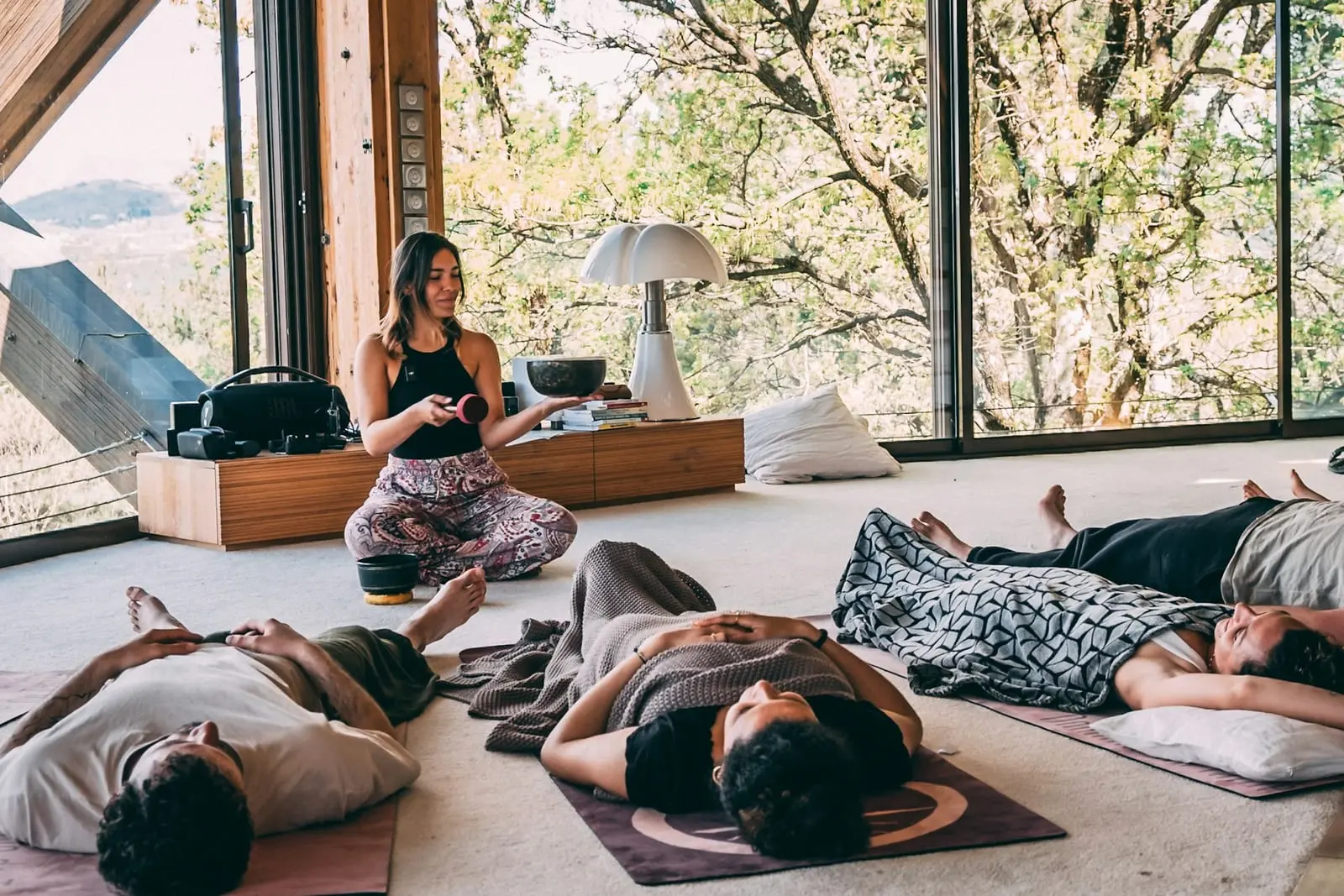
Your students keep asking when you’ll take them away for a weekend, and you can already picture the morning practice with a view. Then come the questions that stop most teachers: where, how much to charge, what if only three people book, and whether you can even sell a trip. This guide shows you how to plan a yoga retreat from start to finish: which kind to start with, a timeline, the venue, every cost, a worked budget with a break-even table, deposits, the rules to check, and how to fill the places from your own studio first.
How to plan a yoga retreat: the short answer
Plan a yoga retreat backwards from the people who will come, not forwards from a beautiful venue. In practice that means six decisions, in this order:
- Check demand first. Ask your students before you sign anything, and count real yeses, not likes.
- Pick the size of the first step. A day retreat or a weekend nearby before a week abroad.
- Give yourself time. About six months for a weekend nearby, about a year for a week abroad.
- Price for your minimum number, not a full house. The retreat should pay you properly when two thirds of the places are sold.
- Write your money rules down. Deposit, the date the rest is paid, refunds, and the date you decide whether it goes ahead.
- Check the rules before you take money. Package travel law, your insurance, and how you handle health information.
Day, weekend or week away: which retreat to start with
For a first retreat, a weekend within driving distance is usually the best balance: long enough to feel like a retreat, short enough that your regular students can say yes. Each step teaches you something the next one needs.
| Kind | Good for | Watch out for |
|---|---|---|
| Day retreat (no overnight stay) | Testing demand, a low price, no rooms to fill, simpler rules | Feels like a long workshop unless the place and the day are special |
| Weekend nearby (2–3 nights) | Your own students, easy travel, a smaller budget, a first real retreat | Rooms and meals to organise; the venue will want a deposit |
| Week away (5–7 nights, often abroad) | A bigger experience and a higher price, students from beyond your studio | Long lead time, flights, more money at risk, more rules and insurance questions |
Teachers who run retreats for years often describe the same path: a day, then a weekend, then a week. It’s the same advice as for opening a yoga studio: plan something that works without the big version. If you co-host your first one with a teacher or a studio you trust, you share the work, the audience and the risk.

Will your students come? Check before you sign anything
The most painful retreat stories start the same way: a venue deposit paid, a beautiful page online, and no bookings. A short demand check takes two weeks and costs nothing.
- Ask three things: which month suits them, how far they would travel, and what price range feels right for a weekend with rooms and meals. Ask in class, in your newsletter and in a message to regulars.
- Collect names, not reactions. Keep a list of people who said “I’m in if the dates work”. Compare it with the minimum number you’ll work out below.
- Read the answer honestly. If you can’t name about half your minimum from people who told you yes in person, start smaller (a day retreat) or wait for the next season.
- Mind the calendar. Many people fix their summer holidays early in the year, and school holidays decide a lot for parents. A retreat sold in May for August is often too late.

Your yoga retreat planning timeline
A weekend nearby needs about six months, a week abroad about twelve. People travelling abroad book early; people coming for a local weekend book late, so plan your selling around that.
| Week abroad | Weekend nearby | What to do |
|---|---|---|
| 12 months before | 6 months | Demand check, dates, rough budget, shortlist of venues |
| 11–10 months | 5 months | Visit the venue (in the same season), read the contract, check insurance and the rules, sign |
| 9 months | 4–5 months | Final price and terms, the retreat page, open bookings to your members first |
| 8–6 months | 4–2 months | Open to everyone: your website, social media, past students, partner studios |
| 3 months | 6–8 weeks | Go or no-go date: enough bookings for your minimum? Tell the venue final numbers |
| 2–1 months | 4–6 weeks | The rest is paid; health forms, food needs and arrival times collected; programme fixed |
| 1–2 weeks | 1 week | Final information: how to get there, what to bring, the first evening |
| After | After | Thank you, photos, feedback, your real budget against the plan, the next date |
Put the go or no-go date in your calendar before you sell a single place, and make sure it comes before the venue’s cut-off for final numbers.
Choosing a yoga retreat venue
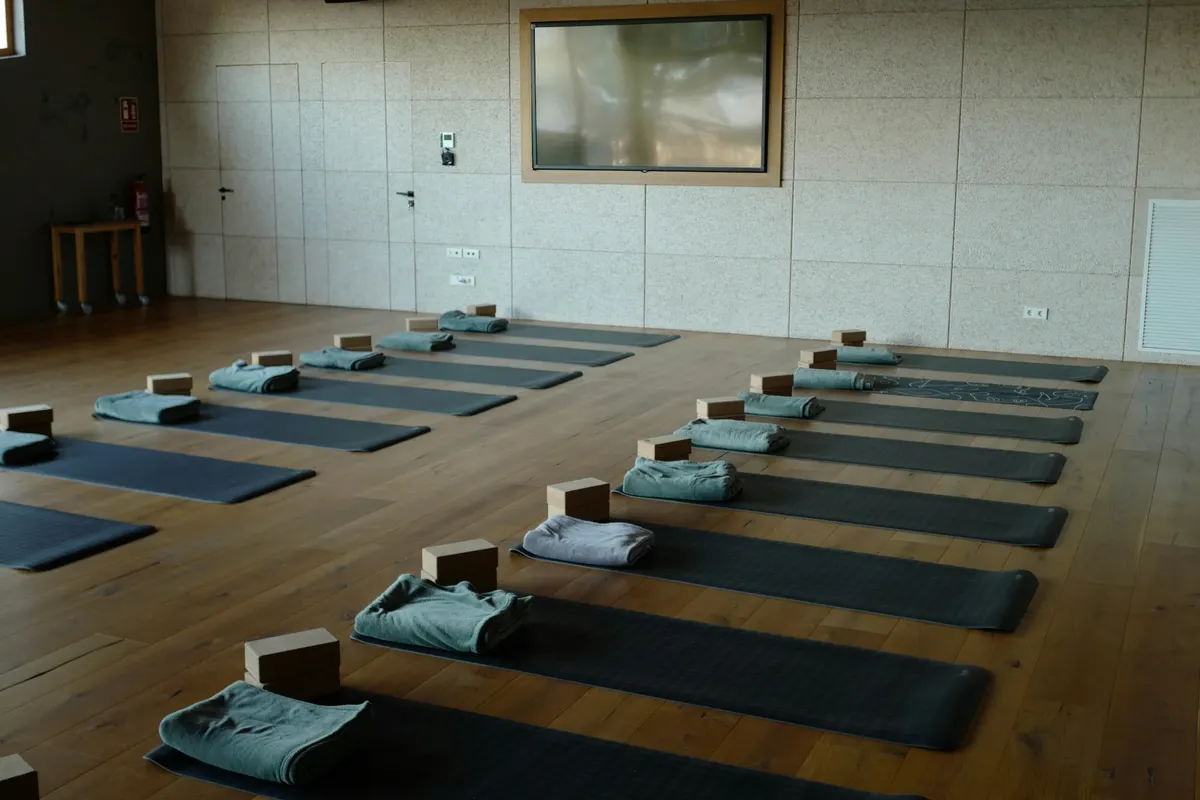
The right venue has a practice room big enough for your group, rooms and bathrooms that suit the people you teach, food you’d happily eat for three days, and a contract you can survive if bookings are slow. The photos matter least of all.
- Visit in the same season. A quiet resort in February can be a noisy one in July, with a busy kitchen setting your schedule.
- Count bathrooms, not just beds. Eight people sharing two bathrooms will be the first thing they talk about.
- Lay out the mats in your head. Your group plus you, with space to move, props and a place for shoes.
- Prefer private use. Sharing a resort with other guests changes the feeling of a retreat.
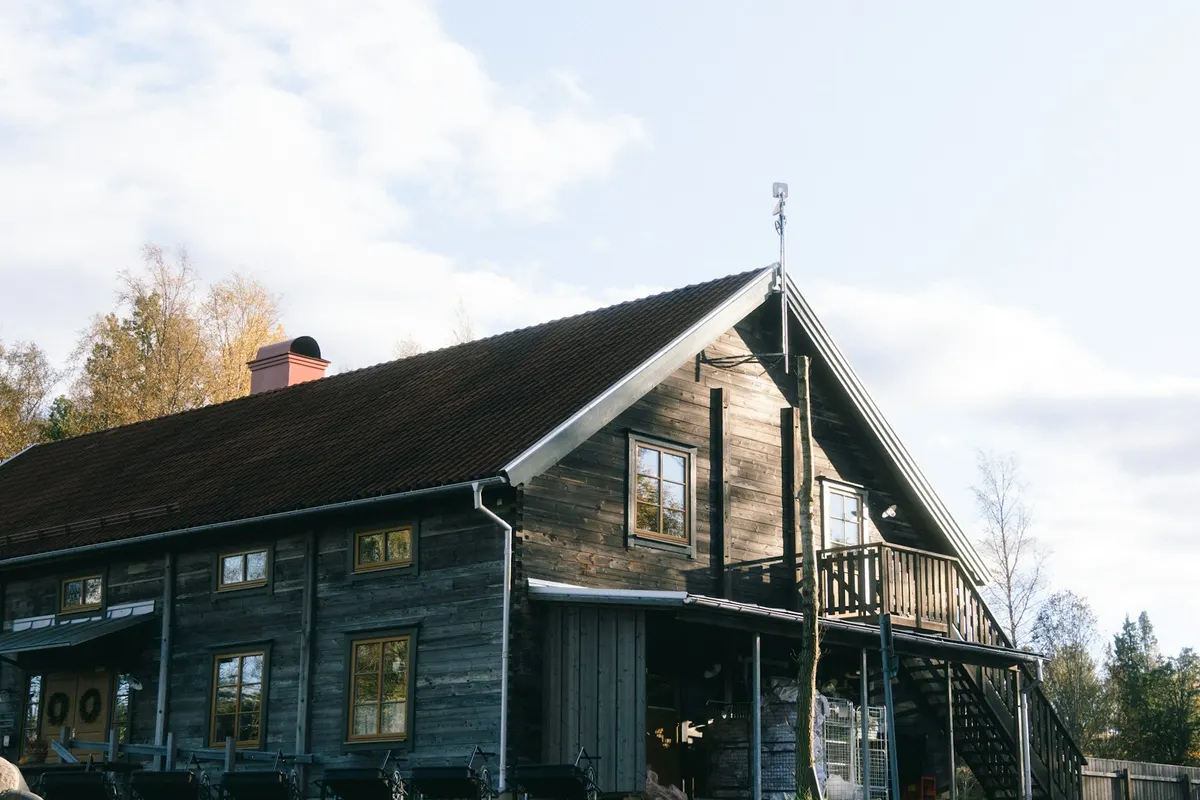
Questions to ask the venue (copy and send)
Hello, I’m planning a yoga retreat for up to [12] guests from [date] to [date]. Before we go further, could you tell me:
1. The price per guest per night for a shared and a single room, and exactly what’s included (meals, drinks, the practice room, mats, cleaning, local tourist tax)?
2. The deposit, when the rest is due, and what happens to my payments if I cancel or have fewer guests?
3. Is there a minimum number of guests I pay for? By what date do you need final numbers, and can I release rooms before then?
4. Will we have the place to ourselves, and what are the quiet hours?
5. Can you cook for vegetarian, vegan and gluten-free guests and for allergies?
6. Is there a covered space for practice if the weather turns?
7. Do you offer a free or reduced room for the teacher?
8. Do you arrange transfers from the airport or the nearest station, and at what cost?
Thank you, [your name], [studio]
Question 3 is the one that decides your risk. A minimum guarantee means you pay for that number of guests even if fewer come. Ask for a minimum below your own minimum, a final-numbers date after your go or no-go date, and the right to release rooms without a penalty until then. A first contract is often a starting point, so ask.
How much does it cost to host a yoga retreat? Every line in the budget
Split your yoga retreat costs into two groups: costs that grow with every guest, and costs you pay whether two people come or twelve. Then add the costs most first budgets forget: your own time and a buffer.
- Per guest: room and meals, snacks and drinks, an outing or a treatment that’s in the price, a welcome pack, local tourist tax, transfers if you include them.
- Fixed: the practice room, a co-teacher or assistant (their fee, room and meals), a chef if the venue doesn’t cook, props you hire or bring, insurance, photos and ads, printing, your scouting visit.
- Your own trip: your room and meals, your travel, an extra night before to set up.
- Back at the studio: a cover teacher for the classes you miss, or the class income you lose by closing.
- Money costs: card fees on every payment, a commission if a listing site brings the booking, currency conversion if you pay a venue abroad.
- Your pay: planning, selling, messages, admin and three days of hosting add up to more hours than the teaching. Count them.
- A buffer: about a tenth of your costs for what you didn’t see coming: a taxi, a price change, an extra meal.
Ask your accountant two questions early: whether you must charge VAT on the retreat and on what (some countries have special rules for travel), and how to record money taken months before the retreat happens.
How much to charge for a yoga retreat
Charge enough that the retreat covers every cost and pays you properly at your minimum number of guests. A common choice is about two thirds of the places (8 of 12 in the example below). The formula fits on one line:
Price per guest = (fixed costs + buffer + your pay) ÷ minimum guests + cost per guest, then add card fees.
Pricing for a full house is the classic mistake: it only works if every place sells, and the first cancellation eats your pay. Pricing for your minimum means every guest above it is a real reward. It’s the same logic as pricing your classes: start from your costs and your time, not from what others charge.
Worked example: a weekend for 12
This example is made up to show the method; it is not a price guide. Prices vary a lot by country and season, so put in the quotes you get. Say you plan a Friday-to-Monday retreat (3 nights) at a guesthouse two hours away, with 12 places: 8 in shared rooms and 4 singles. Your minimum is 8 guests. All prices here are before any VAT; ask your accountant what applies to you.
| Line | Example |
|---|---|
| Room and all meals, shared room (€80 × 3 nights) | €240 per guest |
| Room and all meals, single room (€110 × 3 nights) | €330 per guest |
| Saturday guided walk with lunch out, welcome pack | €45 per guest |
| Cost per guest | €285 shared, €375 single |
| Practice room (3 days) | €300 |
| Your own room and meals | €240 |
| Photos and ads | €350 |
| Extra insurance for organising (your quote) | €200 |
| Scouting visit | €150 |
| Cover teacher for 6 studio classes | €210 |
| Fixed costs | €1,450 |
| Buffer: a tenth of the costs at 8 guests | €370 |
| Your pay: about 50 hours at €30 an hour | €1,500 |
Now the formula: (€1,450 + €370 + €1,500) ÷ 8 = €415, plus €285 cost per guest = €700. With card fees of about 2% in this example, that’s €714, rounded to €720 for a shared room. The single costs you €90 more, so price it to leave you the same as a shared place: about €812, rounded to €820.
Are yoga retreats profitable? The break-even table
A yoga retreat is profitable when you price it for your minimum and the venue contract doesn’t push your risk up. Here is the same example at different numbers of guests (all in shared rooms, to keep it simple):
| Guests | Income | All costs | Left for you and the buffer | If the venue’s minimum is 8 |
|---|---|---|---|---|
| 4 | €2,880 | €2,648 | €232 | −€728 |
| 6 | €4,320 | €3,246 | €1,074 | €594 |
| 8 | €5,760 | €3,845 | €1,915 | €1,915 |
| 10 | €7,200 | €4,444 | €2,756 | €2,756 |
| 12 | €8,640 | €5,043 | €3,597 | €3,597 |
Three things this table tells you:
- Covering costs is not the goal. Four guests cover the costs, but you’d work about 50 hours for €232.
- The venue’s minimum is where you lose money. With a minimum of 8 beds, four guests means paying €240 for each of four empty rooms. This is why question 3 matters.
- Your hourly pay moves a lot. At 8 guests you earn about €31 an hour for your 50 hours (€38 if you don’t need the buffer); at 12, about €65 (€72). That’s the upside of pricing for the minimum.
If the price comes out higher than your students will pay, don’t just lower it. Change the inputs: a shorter stay, a simpler venue, fewer fixed costs, a co-host who brings their own students, or a day retreat first.

Early bird, member price and extras
- Early bird: a lower price until a date gets the first bookings in, and the first bookings make the next ones easier. In the example, €680 instead of €720 for all 8 minimum places would cost you about €314. Fine, if it ends at a date.
- Member price: a small discount for your members rewards them for coming first. Keep all discounts inside what your buffer and pay can carry.
- Extras: things some guests want and others don’t, such as a minibus from the studio, a massage or a room upgrade. Selling them separately keeps the main price lower.
Deposits, payment dates and your refund policy
Take a deposit to hold each place, collect the rest on a fixed date before your venue needs its money, and write down what happens when someone cancels. Clear rules, applied the same way for everyone, prevent most arguments.
- The deposit should cover what you’d lose if that person disappeared: their share of the venue deposit and your work so far. A share of the price (for example 30%) is simple to explain.
- The balance date sits a few weeks before the retreat and before the venue’s final payment, so you never pay the venue with your own money.
- Refunds: some teachers keep the deposit from the start; others allow free cancellation until the balance date, then keep the deposit; others refund in steps (everything more than 60 days before, half until 30 days, nothing after). Any of these works if it’s written down and shown before people pay.
- Cancellations: in the example, if you keep deposits, a guest who cancels early still leaves you €216 (30% of €720) towards the empty place. If you allow free cancellation until the balance date, you carry that risk until then, so set the date early enough to resell the place.
- Where the money sits: keep guests’ payments apart from your everyday studio money until the venue is paid, and if a listing site takes the bookings, check when it passes the money on to you. Ask guests to have travel insurance: it turns many hard refund conversations into an insurance claim.
Booking terms to adapt
Booking and payment: your place is held with a deposit of [30%]. The rest is paid on [date].
If you cancel: until [date] you get [your deposit back / everything back except the deposit]. After that, a cancellation fee of [the full price / X%] applies, unless you pass your place to a friend. Please have travel insurance.
If we cancel: the retreat goes ahead with at least [8] guests. If we don’t reach that by [date] (for a retreat of 2 to 6 days, at the latest 7 days before it starts), or can’t run it for reasons beyond our control, you get everything you paid back within 14 days.
Your health: please complete the health form by [date] and tell us about injuries, pregnancy and food needs.
Have a local lawyer check your terms before you use them; consumer law and travel law decide what you may keep. Our guide to cancellation policies covers the same thinking for classes.
Package travel rules, insurance and health forms
Before you take the first deposit, check three things: whether your retreat counts as a package holiday, whether your insurance covers organising (not only teaching), and how you’ll handle health information. None of this is legal advice; rules differ by country, so check with your national tourism authority, an insurer or a lawyer.
Is your yoga retreat a package holiday?
Often, yes. Under the EU Package Travel Directive, accommodation sold at one price together with other tourist services that are a significant part of the trip (the directive’s recitals give a quarter of the value as a guide), or advertised as its main feature, can be a package. A yoga retreat sells the yoga as its main feature, so it often counts. The UK has very similar rules, and both the EU and the UK changed theirs in 2026, with changes applying over the coming years, so check the version that applies in your country.
Being the organiser of a package comes with duties: you’re responsible for every service in it, and the money people pay you must be protected if your business fails (insolvency protection). Trips under 24 hours without an overnight stay are outside the rules. That’s one more reason a day retreat is an easy first step. Your options:
- Keep it a day retreat, with no overnight stay.
- Let the venue or a licensed travel organiser be the organiser. They sell the package and hold the protection; you are paid for the teaching.
- Become the organiser yourself, with the registration and protection your country requires.
- Guests book their rooms directly and you sell only the programme. Careful: if you advertise it all as one experience, it can still count as a package.
Yoga retreat insurance
A teacher’s usual liability insurance may cover you for teaching at a retreat but not for organising one: the bookings, rooms, outings and transport. Insurers often call that cover tour operators’ liability. Ask your insurer in writing: “Am I covered to teach and to organise a retreat in [country] from [date] to [date] for [12] guests, including [the walk / the boat trip]?” Keep the answer.
Waiver, health form and food needs
Collect a signed waiver, a health form, an emergency contact and food needs before people arrive. Health information is sensitive personal data: ask only what you need, keep it where only you and your co-host can see it, and delete it after the retreat. Our waiver template guide explains what to include.
Filling your retreat: start with your own members
A studio owner has the easiest audience there is: people who already trust your teaching. Fill the first places from them, then use them as your best advertising for everyone else.
- Tell the people who said yes first. A personal message to everyone on your demand-check list, a day before anyone else hears.
- Members first for a week or two, with the early-bird price and the member price.
- An evening at the studio after class: photos of the venue, the programme, questions answered. People book when they can picture it.
- Then everyone: your website, social media, past students, a partner studio. Show real faces and the real place, not stock pictures of a beach.
- Keep going until the go or no-go date. A short countdown (“4 places left”) and photos from your scouting visit work better than one big announcement.

A message to your members
Hi [name], you told me you’d love a weekend away with us, so you’re hearing it first: our Slow Down Weekend is on, from [Friday] to [Monday] at [place], two hours from the studio. Morning and evening practice, good food, a guided walk and time to do nothing at all. There are 12 places and members get the early-bird price until [date]. All the details and booking are here: [link]. Questions? Just reply. [Your name]
During the retreat and after it
Plan less than you think. People remember the morning practice, the meals together and the free afternoon far more than a fourth workshop. A rhythm that works for many teachers: practice before breakfast, a free middle of the day, a slower practice before dinner, quiet evenings.
- Send one clear message the week before: how to get there, arrival times, what to bring, the first evening.
- Keep one place for messages instead of a group chat where phone numbers are shared with everyone.
- Take photos (with permission). Guests love them, and they sell your next retreat.
- Afterwards: a thank-you message, the photos, three feedback questions, and the date of the next retreat for this group first. Then compare your real costs with the budget.
- Bring them back to the studio. A retreat is the best start to a habit; our guide on keeping members coming back picks up from there.


What owners run into
- A deposit paid before a single booking, then no bookings, for a retreat sold a few months ahead in a season when people had already booked their holidays. Only pay a venue deposit you could afford to lose.
- Bending their own refund rules for one guest, then facing the same request from others. Decide your rules once and apply them the same way for everyone.
- Doing too much: an overpacked programme that left everyone, the teacher included, tired. Free time is part of what people pay for.
How MOTVIVO helps
- Sell your retreat as an event with its own page on your club website and in your booking app: photos, the programme day by day, what’s included, your hosts and how to get there.
- Options such as a shared or single room, each with its price and places, an early-bird price until a date, and extras like a minibus from the studio.
- A deposit when people book, with the rest charged automatically a set number of days before the retreat (you choose how many). Free cancellation until then, after that the deposit is kept; people see this before they book. They pay by card, Apple Pay or Google Pay, straight into your own Stripe account (online payments).
- A member discount on events, questions at sign-up (such as food needs), and an Event chat instead of a WhatsApp group, where nobody’s phone number is shared.
- A simple budget with fixed and per-person costs that shows your profit and how many places you need to break even. Events are part of the Club and Premier plans; see pricing.
Questions
How far in advance should I plan a yoga retreat?
Plan about six months ahead for a weekend near your studio and about twelve months for a week abroad. Guests travelling abroad need time to book flights and holidays, while local guests decide later. Open bookings to your members first about four to five months before a local weekend, and set a go or no-go date before the venue needs final numbers.
How many people do I need for a yoga retreat?
Work out your own minimum: the number of guests at which the retreat covers every cost and pays you properly. A common choice is about two thirds of the places. Price for that number, not for a full house, and make sure the venue’s minimum guarantee is lower than yours, so slow bookings don’t leave you paying for empty rooms.
How much does it cost to host a yoga retreat?
It depends on the country, the season, the length and the venue, so build your own budget from real quotes. List the costs that grow with each guest (room, meals, outings) and the fixed ones (practice room, co-teacher, insurance, ads, your own stay, cover at the studio). Add your pay and a buffer of about a tenth, then divide by your minimum number of guests.
Do I need special insurance to run a yoga retreat?
Often, yes. A teacher’s usual liability insurance may cover teaching at a retreat but not organising it, which includes the bookings, rooms, outings and transport. Ask your insurer in writing whether you’re covered to teach and to organise in that country, on those dates, for that number of guests. Ask your guests to have their own travel insurance too.
Is a yoga retreat a package holiday?
It can be. In the EU and the UK, accommodation sold together with yoga at one price can count as a package, which brings duties such as protecting guests’ payments. A day retreat without an overnight stay is outside these rules. Letting the venue or a licensed organiser sell the package is another route. Check the rules in your country before taking deposits.