 MOTVIVO


Most studio owners didn’t open a studio to do sales, and pitching a membership to someone who just finished class feels wrong. Yet knowing how to sell memberships well is mostly about timing and honesty: noticing when someone already comes often enough that a membership is the better deal, and telling them so in plain words. This guide gives you the right moments, a short script you can use at the desk, the maths to show, answers to the usual objections, and how online buying and renewals fit in.
How to sell memberships without being pushy: the short answer
Suggest a membership only when someone’s own habits show it would save them money or make life easier, show them the sum, and make yes easy and no fine. Selling feels pushy when you pitch to someone who isn’t ready or hide the cheaper option. It feels helpful when you point out a better deal for what they already do.
Three habits make the difference:
- Listen first. Ask how often they’d like to come and what gets in the way. Their answer tells you which option fits.
- Recommend one option, offer one alternative. A long price list delays decisions.
- Actually ask. Many owners never ask, for fear of seeming pushy. A friendly question isn’t pressure; ignoring a no is.
When to suggest a membership: the right moment
The best moment is when the membership already makes sense for the person, usually after a few visits or when they’re about to pay again. Before that it’s a pitch; after that it’s advice.
- After the third or fourth visit. They’ve chosen your studio and have a rough rhythm. Their first class is too early.
- On their last credit. They have to decide what to buy next anyway, so the question is natural.
- When they buy a second or third pack. A regular buying packs back to back often pays more than they would on a membership.
- Near the end of an intro offer. The trial was the introduction; the next step should be ready before it runs out.
- When they say it. “I keep forgetting to top up” is your cue.
Pick a calm moment, after class rather than during a busy check-in, and let the person who knows them best say it, often the instructor.
A simple membership sales script
A good membership sales script is four short steps: notice, ask, show, offer. It takes a minute and sounds like a conversation, not a pitch. Adapt the words so they sound like you:
1. Notice. “You’ve been coming twice a week lately. It’s lovely to see you in the 6:30 class.”
2. Ask. “Is that roughly what you’d like to keep doing, or would you like to come more?”
3. Show. “Then the 2-a-week membership would work out cheaper per class than the packs you’ve been buying. Here’s the difference.” (Show the sum.)
4. Offer. “Would you like to switch when your pack runs out? If you’d rather stay on packs, that’s completely fine too.”
The last sentence matters: an easy way to say no makes the conversation feel safe, which is why people listen. If they say no, thank them and leave it for a few weeks.
The same steps work by phone or message. In a message, keep it to three lines: what you noticed, the sum, and “reply if you’d like me to set it up”.
Show the maths per class
The most persuasive thing you can show is the price per class for what the person actually does. Numbers they can check beat any sales line:
- Price per class on a pack = pack price ÷ number of classes.
- Price per class on a membership = monthly price ÷ classes they realistically come per month.
An example with made-up prices, for a member coming twice a week (about 8 classes a month):
| Option (example prices) | Cost for 8 classes | Per class |
|---|---|---|
| Drop-in at €15 | €120 | €15 |
| 10-class pack at €120 | €96 (8 credits used) | €12 |
| 2-a-week membership at €80 a month | €80 | €10 |
Be honest with the result. If someone comes three times a month, the pack is the better deal, and saying so builds more trust than any sale. One Pilates owner steers every client to the cheapest option for how often they come. If you haven’t set your prices yet, start with how to price fitness classes so the ladder from drop-in to membership makes sense.
Trials and intro offers: selling memberships to newcomers
Don’t sell a membership to someone on their first visit; sell them a trial that leads to one. A short intro offer lets people find their classes and their rhythm, and by the end you both know whether a membership fits.
- Keep the trial short and clear, for example 3 classes in 2 weeks.
- Say on day one what comes next: “After your intro, most people move onto the 2-a-week membership.”
- Check in before the last trial class, not after it has expired.
Our guide to intro offers that turn first visits into regulars covers how to design the trial itself.
Handling objections: price, commitment, travel
Most objections are a reasonable question in disguise, so answer the question instead of arguing.
“It’s too expensive”
Ask what they’re comparing it to. Often it’s the monthly total against a single class. Show the per-class sum for how often they come. If it still doesn’t fit, offer a smaller membership (once a week) or a pack, rather than a discount on the spot. Discounting whenever someone hesitates teaches people to hesitate, and it isn’t fair to members paying full price.
“I don’t want to be tied in”
Many people have been burned by a gym contract they never used. Tell them plainly how long the membership runs and how it ends: a month they renew if they like is very different from a year’s contract. Offer a short one first if you can.
“I travel a lot”
Ask how many weeks a month they’re usually home. If they’re away often, a class pack with a sensible expiry date suits them better. If they’re mostly here, a membership with a weekly limit works.
“I need to think about it”
Usually one question is still open: money, a partner, or whether they’ll use it. Ask kindly: “Of course. Is there anything I can make clearer?” Then agree on a next step, such as a message from you when their pack runs out, instead of a vague “see you”.
How to sell memberships online and in person
Do both: the conversation happens in person, but buying should be possible from a phone at any hour. People often say yes at the desk and mean to “sort it out later”. If they can buy in the booking app on the way home, later happens.
- Show the same options, names and prices online and at the desk.
- Lead each option with who it’s for (“Coming twice a week?”) and its price per class.
- Make it clear which classes a membership covers.
- After a conversation, send a short message with a link to buy, so they don’t have to search for it.
With online payments members can pay by card in the booking app, and the money goes to your own account. For when a pack or a membership is the better offer, see class packs vs memberships.
Renewals: the membership sale most studios forget
A renewal is the easiest membership you’ll ever sell: the person already knows and likes your classes. Most lapses are quiet: the membership ends, life gets busy, nobody asks.
- Look a week ahead at memberships ending soon and say something before they end.
- Make it personal: “You’ve done 9 classes this month, your best yet. Shall we keep it going?”
- If someone hasn’t been coming, ask how they are before mentioning renewal. A smaller plan may suit them now.
- If you raise prices, give notice and consider letting current members renew at their old price for a while.
Renewals depend on members coming regularly in the first place; our guide to keeping members coming back covers that side.
What owners run into
- Worrying that “membership” sounds pushy. One owner held back for years, then found clients wanted a simple monthly choice.
- Pricing a launch membership too low. A cheap founding plan can fill classes with the same few people and is hard to raise later. Price memberships so they still work when they sell well.
- Guessing someone’s budget. Offering the cheapest option before the person has said anything sells them short. Ask first.
- Letting “I’ll think about it” end it. Without a next step, people rarely come back to it.
How MOTVIVO helps
- Today shows you each morning the members on their last credit and the memberships ending soon, with a message prepared for you to send.
- Sell memberships and class packs (unlimited or with weekly or monthly limits, for a month, a term or a year) online through your own Stripe account or at the desk.
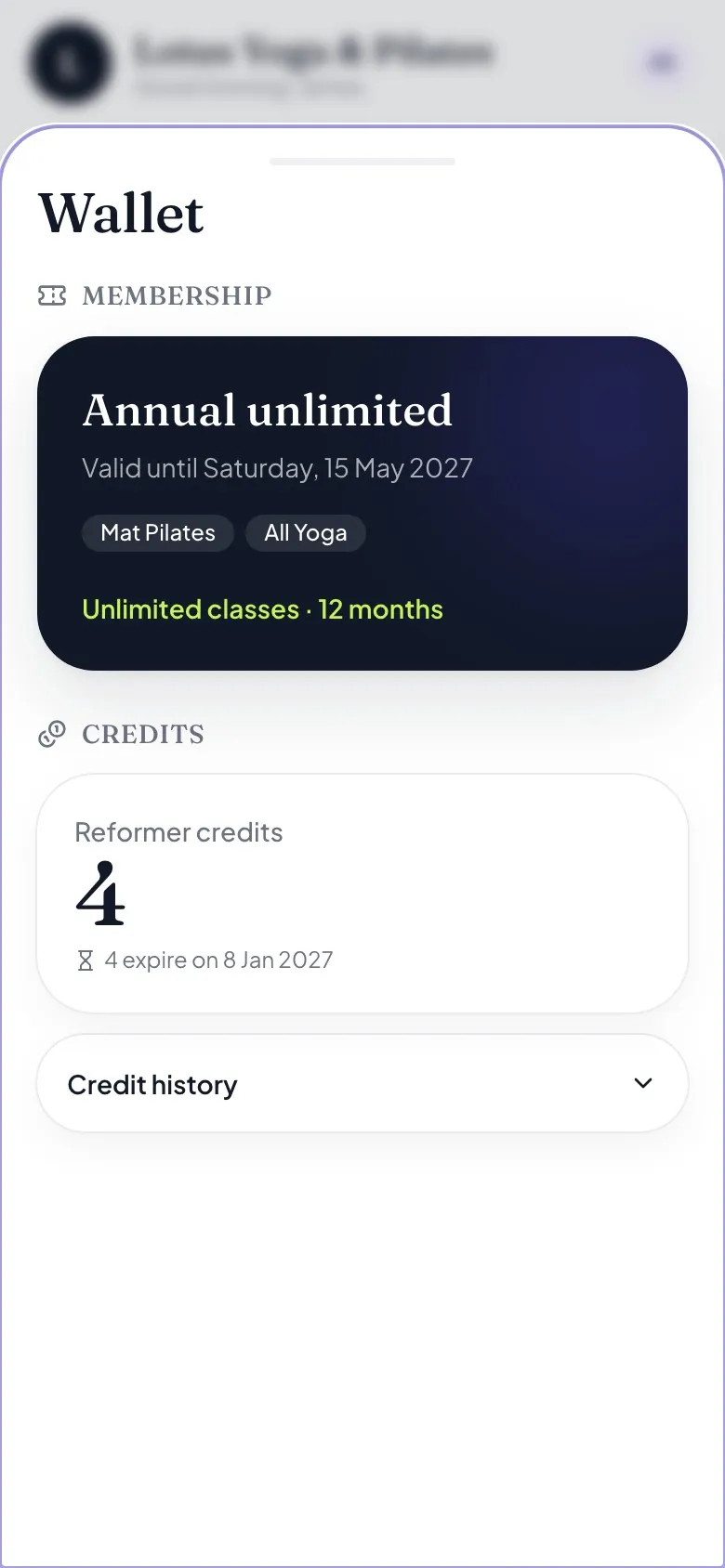
- Members see before they book whether a class uses their membership or credits.
- The member card in the booking app shows their membership or credits and until when, with one button to renew or top up when it’s needed.
Questions
How do I sell memberships without being pushy?
Only suggest a membership when someone’s own habits show it’s the better deal, usually after a few visits or on their last credit. Show them the price per class for how often they come, recommend one option, and make it easy to say no. Pushiness comes from pitching too early or ignoring a no, not from asking a friendly question at the right time.
When is the best time to offer a membership?
The best time is when the person is about to pay again: on their last credit, when buying a second or third pack, or just before an intro offer ends. By then they’ve chosen your studio and have a routine, so a membership is advice rather than a pitch. Avoid their first class and busy check-in moments; pick a calm minute after class.
Should I offer a discount when someone hesitates?
Usually not. A discount on the spot teaches people that hesitating pays, and it isn’t fair to members paying the normal price. Instead, find out what’s behind the hesitation. If it’s price, show the per-class sum or offer a smaller option, such as a once-a-week membership or a class pack.
What should I say to someone who travels a lot?
Ask how many weeks a month they’re usually home, then recommend honestly. If they’re away often, a class pack with a sensible expiry date suits them better than a membership. If they’re mostly here, a membership with a weekly limit covers the weeks they are. Recommending the cheaper option when it fits builds trust and keeps them coming.
Should instructors sell memberships, or only the front desk?
Instructors are often the best people to mention it, because they know who comes regularly and members trust them. They don’t need a sales pitch: a short “you’d save on the 2-a-week membership, ask at the desk” after class is enough. Give them the per-class sums and the current prices, and let the desk or the booking app handle the purchase.